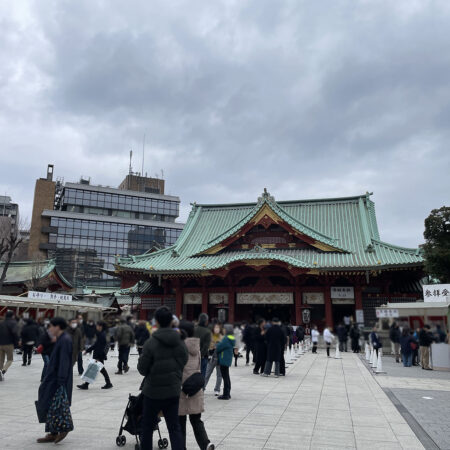
December has no national holidays in Japan. Instead, there is the New Year holiday period (年末年始・ねんまつねんし), usually from around December 29 to January 3.
Many people return to their hometowns (帰省・きせい, meaning “going back to one’s family home”) or enjoy leisure time, so service industries such as hospitality and tourism become very busy during this season.
Government offices and many large companies pay bonuses twice a year, in summer and winter. The amounts for summer and winter bonuses are generally similar, and around 400,000 yen per bonus is often used as a rough reference.
However, companies are not legally required to pay bonuses, so many companies do not offer them at all.
In the job market, many people begin looking for new positions after receiving their winter bonus. From January to March is the most active period for job changes.
In other words, preparation for job changes aimed at starting a new position in April of the following year has already begun. During this peak season, when job hunting under the same conditions and competitive environment as Japanese candidates, Japanese job seekers tend to have a significant advantage.
Heavy Snow (大雪・だいせつ)
Early December marks the beginning of snowfall, even in lowland areas. This is the true start of winter.
In Hokkaido and the Tohoku region, there are days when several tens of centimeters of snow fall overnight. People on the streets are fully dressed in winter clothing.
Winter Solstice (冬至・とうじ)
In late December comes the Winter Solstice (冬至・とうじ), the day with the shortest daylight hours of the year.
It is said that soaking in a yuzu bath (柚子湯・ゆずゆ) on this day helps prevent colds. Around this time, the sun sets as early as about 4:30 p.m.
New Year’s Eve (大晦日・おおみそか)
New Year’s Eve is the last day of the year. There is a custom of eating Toshikoshi soba (年越しそば・としこしそば) to mark the occasion. This tradition dates back to the Edo period.
Large-scale countdown events like those common in Western countries are not typical in Japan. Although countdown events were once held in some cities, they have largely disappeared since the COVID-19 pandemic.
Instead, people quietly welcome the new year while listening to the ringing of temple bells known as Joya no Kane (除夜の鐘・じょやのかね).
As New Year’s Eve approaches, people become busy with preparations such as year-end cleaning (大掃除・おおそうじ) and writing New Year’s cards (年賀状・ねんがじょう).
Year-end cleaning is meant to remove the dirt of the past year and welcome Toshigami-sama (年神様・としがみさま), the deity of the New Year. For this reason, it is traditionally completed before New Year’s Eve.
Incidentally, December 13 is the day when Susu-harai (煤払い・すすはらい), a ritual cleaning, is performed at shrines and temples. These sacred customs have also become part of household traditions.
The custom of visiting people in person to offer New Year’s greetings gradually shifted to greeting by postcard, which became the tradition of New Year’s cards (年賀状・ねんがじょう).
These cards often feature the zodiac animal of the new year (干支・えと) and include formal greetings such as “Kinga Shinnen” (謹賀新年・きんがしんねん), known as gashi (賀詞・がし).
It is customary to send them so they arrive on January 1.
Notes on Residence Status and Visa Procedures
Changing Status from “Student” to “Work” for New Graduates
For international students graduating in March and starting work in April, applications for Change of Status of Residence usually begin in early December. Applying early helps ensure a smooth start to employment.
Renewal of Period of Stay
If your residence period expires in early to mid-January, it is recommended to apply within the year, taking government office closures into account. Immigration counters are extremely crowded in December.
Using Online Applications
During busy periods, using the Immigration Services Agency’s online application system allows procedures to be completed 24 hours a day (a My Number card is required).
Notes on Administrative Procedures
Government offices and immigration offices are closed during the New Year holiday period (December 29 to January 3), so early action is essential.
Year-End Tax Adjustment (年末調整・ねんまつちょうせい)
For salaried employees, tax adjustments are made with the December paycheck. In Japan, companies typically handle the necessary paperwork on behalf of employees.
This process also includes dependent deductions (扶養控除・ふようこうじょ) for relatives living overseas.
Preparation of Remittance Documents
If you claim family members in your home country as dependents, you will need remittance certificates, such as bank transfer records.
Since you must prove remittances for the entire year (January to December), be sure to make your final transfer and secure the necessary documents before the end of the year.
Preparation of Family Relationship Documents
Official documents such as birth certificates and marriage certificates (with Japanese translations) must be submitted to your company.
In December, city streets become lively, decorated with illuminations and Christmas trees that sparkle throughout urban areas. Many offices also put up Christmas decorations.
In Japan, Christmas is often celebrated with family, friends, or romantic partners.
As temperatures drop and the air becomes dry, cases of influenza tend to increase. Be sure to get vaccinated (予防接種・よぼうせっしゅ) and take good care of your health.
Let’s welcome the New Year with a refreshed and positive mindset.
By Hajime Saito
X: @hajimesaitoYJC